How AI Helps Detect Early Cancer Signs: A Clear Look At New Detection Tools
Author:Mike Fakunle
Released:September 26, 2025
Early cancer detection is a growing focus in healthcare, and many people now want to understand how AI helps detect early cancer signs. This interest comes from the need for faster, safer, and more accurate screening.
More hospitals, labs, and clinics are using AI cancer screening tools because they detect small changes that the human eye may miss. This shift gives patients greater confidence and helps doctors work more quickly with fewer delays.
Why Early Cancer Detection Matters
How Cancer Grows Before Symptoms Appear
Cancer often starts with tiny cell changes that show no signs. Many people feel healthy during this stage, which makes early cancer detection hard. These changes can grow for months or years before a symptom appears. This is why doctors look for ways to catch problems long before pain, swelling, or unusual lumps show up.
Why Early Detection Improves Survival Chances
When cancer is found early, treatment is easier, and success rates are higher. Tumors are smaller, and the cancer is less likely to spread. Early cancer detection gives patients more treatment options and reduces the need for long hospital stays.
The Gaps In Traditional Screening Methods That AI Tries To Fix
Traditional tools sometimes miss small details in scans or lab tests. Human fatigue, image noise, and time pressure can affect results. AI cancer screening tools overcome these limitations by analyzing multiple data points simultaneously and highlighting early cancer signs more quickly.
How AI Detects Early Cancer Signs
How AI Scans Medical Images For Tiny Changes
AI medical imaging systems study mammograms, CT scans, and MRIs. They look for patterns linked with early cancer detection, such as:
Micro shadows in lung scans
Slight shape changes in breast tissue
Small spots in colon images
These details can be too small for the human eye but clear to a trained model.
How AI Reads Blood Tests And Biomarkers
Some cancers release markers into the blood long before symptoms. AI cancer screening tools compare blood test data, spot unusual shifts, and flag patterns related to early cancer signs. They often find early warnings linked with proteins, tumor DNA, or cell changes.
How AI Tracks Patient Symptoms And History
AI systems can study long-term patterns that suggest rising cancer risk. They use information about lifestyle, age, and genetic factors to support cancer risk prediction. This helps doctors plan future tests earlier.
Types of AI Tools Used in Early Cancer Detection
Imaging-Based AI Tools
These tools study mammograms, lung scans, and colonoscopy videos. They make cancer diagnosis technology faster by marking areas that need closer attention.
Lab-Test AI Tools
These tools search blood samples for early cancer signals. Some systems use advanced modeling to spot markers linked with multiple cancer types.
Predictive AI Models
Cancer risk prediction tools study patient history and health changes. They warn doctors when someone may need closer monitoring.
Cancer's AI Can Help Detect Early
Breast Cancer
AI medical imaging tools detect microcalcifications and patterns in dense breast tissue that often make screening hard.
Lung Cancer
Early lung tumors are tiny and easy to miss. AI cancer screening systems quickly mark small nodules and reduce review time.
Colorectal Cancer
AI tools help spot small polyps during colonoscopy. Early removal lowers long-term cancer risk.
Skin Cancer
AI compares moles and skin spots with large image libraries and flags unusual patterns.
Blood Cancers
Changes in blood cell shapes and counts may hint at early issues. AI supports early cancer detection by tracking patterns over time.
What Makes AI Good at Spotting Early Cancer Signs
Ability To Read Millions Of Cases Faster Than Humans
AI learns from large groups of images and lab results. This wide training helps the system consistently learn patterns associated with early cancer detection.
Consistent Accuracy Without Fatigue
Unlike humans, AI does not get tired. It reviews each scan or test with the same focus.
Ability To Detect Patterns Too Small For Human Eyes
Cancer-detection technology often detects changes that are nearly invisible. These tiny signs give doctors more time to act.
Real-World Examples of AI Improving Early Detection
Hospitals Using AI to Speed Up Imaging Reviews
Hospitals use AI-based medical imaging tools to prioritize high-risk scans. This reduces waiting time and speeds up care.
Screening Programs Catching Cancers Earlier Using AI Triage Tools
Large screening programs report higher detection rates after adding AI cancer screening systems. These tools help doctors focus on scans that need quick attention.
Research Groups Using AI To Detect Markers In Blood Tests
Teams studying blood-based screening use AI to read signals linked with cancer risk prediction. Many projects, including those highlighted by groups at the National Institutes of Health, explore how AI can support early discovery.
How AI Works With Doctors, Not Against Them
Doctors Verifying AI Findings
AI does not replace medical experts. It gives suggestions, but doctors make the final call. This teamwork helps reduce mistakes.
AI Helping Remove Human Error
AI cancer screening tools support doctors by catching signs that may be overlooked during busy days.
Faster Diagnosis Workflows That Reduce Patient Waiting Time
AI sorts data quickly, helping doctors make decisions sooner. This makes care smoother and reduces patient stress.
Limits and Challenges of Using AI for Early Cancer Signs
Risk Of False Positives And False Negatives
AI is not always perfect. It may raise alarms where no cancer exists or miss rare cases. Doctors study results closely to reduce these risks.
AI Models Needing High-Quality Data
AI needs clear images and reliable lab results. Poor data weakens accuracy.
Privacy And Data-Security Concerns
Health data is sensitive. Many groups follow safety rules posted on sites such as the U.S.Food and Drug Administration to protect patient information.
Access Issues In Low-Resource Hospitals
Some hospitals lack the tools needed for advanced cancer diagnosis technology, which affects global use.
What Patients Should Know About AI Cancer Screening
When AI Screening Is Recommended
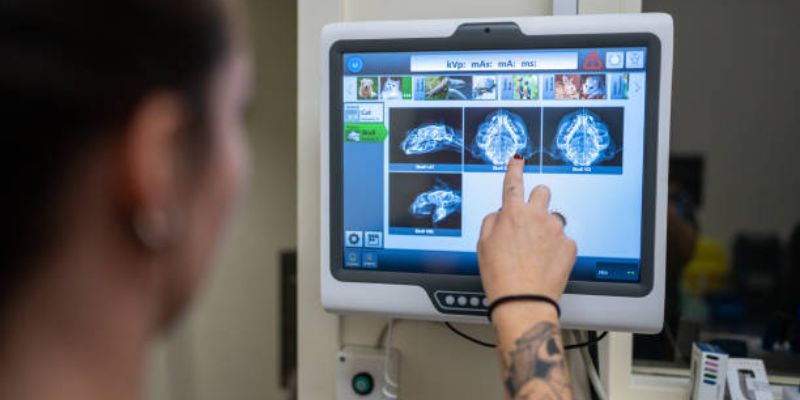
AI cancer screening may be used during routine checkups or when family history raises concern.
Questions Patients Can Ask During Appointments
Patients can ask how AI supports testing, what tools are used, and how results are reviewed.
How AI Screening Fits Into Normal Checkups
Doctors may combine AI results with manual exams, blood work, or imaging to improve early cancer detection.
The Future of AI in Early Cancer Detection
More Accurate And Faster Prediction Tools
New research helps AI models study even smaller patterns linked with early cancer signs.
Personalised Cancer Risk Monitoring
Future tools may track daily changes in health to support cancer risk prediction.
Home-Based Tests Powered By AI Analysis
Some groups explore at-home kits connected to secure platforms like the World Health Organization for wider screening access.
How AI Helps Detect Early Cancer Signs in Today’s Healthcare
AI cancer screening supports doctors, improves timing, and increases accuracy. As cancer diagnosis technology advances, more patients can benefit from early detection tools. When AI medical imaging and lab-based models work together, cancer risk prediction becomes more reliable, giving people a better chance at safe, early care.
Sources
Don't Miss
The Future Of Work: Jobs AI Will Create, Not Replace

The Dark Side Of AI: Privacy Risks You Should Know Today

13 Real-Life Examples Of AI You Use Daily Without Knowing
How AI Is Changing Music Creation And Production Today

How AI Enhances Online Shopping Personalization In Ways Shoppers Notice Every Day